Showing posts with label heart attack. Show all posts

Warning: if you have these 6 symptoms, you could have a heart attack in the next month

Heart attacks are the leading cause of death in the United States, surpassing the number of cancer deaths.  In 2008 alone, heart disease caused up to 25 percent of deaths, which is almost 1 in every 4. Coronary heart disease is the most common type of heart disease, affecting more men than women. Annually, 785,000 Americans have coronary attack for the first time and 470,000 who already had one or more have another attack.

As reported by the Center for Disease Control and Prevention, high blood pressure, smoking, and high cholesterol are the three major causes of heart attack and conditions like being overweight, poor diet, physical inactivity, excessive alcohol intake, and diabetes also add to the risk of heart attack.

Early detection is the critical point when it comes to the likelihood of survival, as nearly half of the heart attacks occur outside the hospital.  A study done by the Center for Disease Control and Prevention has shown that 92 percent of the sufferers experienced chest discomfort as an early symptom of a heart attack. Only 27 percent of them knew that this symptom indicated a heart attack and knew that it was the time to call 9-1-1.

Symptoms Of A Heart Attack


The 6 symptoms below are the major early signs of heart attack. They could let you know that you are at risk of having a heart attack up to a month before it strikes.

1. Chest Discomfort

Chest discomfort comes in many different forms, such as burning sensation, pinching, or feeling pressure in the chest.  These unpleasant symptoms may occur during physical activity or while you are at rest.  In case you experience any unusual sensation in the chest, consult a doctor as soon as possible.

Note:  One can be having a heart attack without feeling discomfort in the chest, as it typically occurs in women.

2. Fatigue

Unexplained fatigue may also indicate that a heart attack is on its way.  As arteries begin to close up, the heart starts working much harder, and this in turn makes the performance of simple tasks much more exhausting.  Consequently, this may lead to sleeping much longer or feeling the urge to take a few naps during the day.

3. Persistent Cough

Persistent cough which doesn’t seem to subside after an extended period of time can be a sign of heart failure. This happens as result of the blood accumulated in the lungs, which is caused by the struggle of the heart to supply the body with sufficient amount of blood.  White or pink mucus could be a product of blood leakage, so pay attention to this sign!

4. Dizziness

In case of compromised heart function the blood circulation is restricted, causing lack of oxygen in the blood. This causes symptoms like dizziness and lightheadedness, which seek immediate medical attention.

5. Shortness of Breath

Shortness of breath is yet another common sign of an impending heart attack. The lungs and the heart wok in synergy, so as heart`s function deteriorates, the lungs fail to get sufficient amount of oxygen they need to function optimally. Hence, this leads to shortness of breath and difficulty breathing.

6. Swelling

Last but not least, heart`s struggle to pump blood may cause the blood to swell, resulting in a bloating-like effect.  The legs, feet, and ankles are the major points of swelling as they are at the greatest distance from the heart.  Peripheral cyanosis, a blue tinge in the extremities or on the lips, is also possible.

source: http://besthealthyguide.com

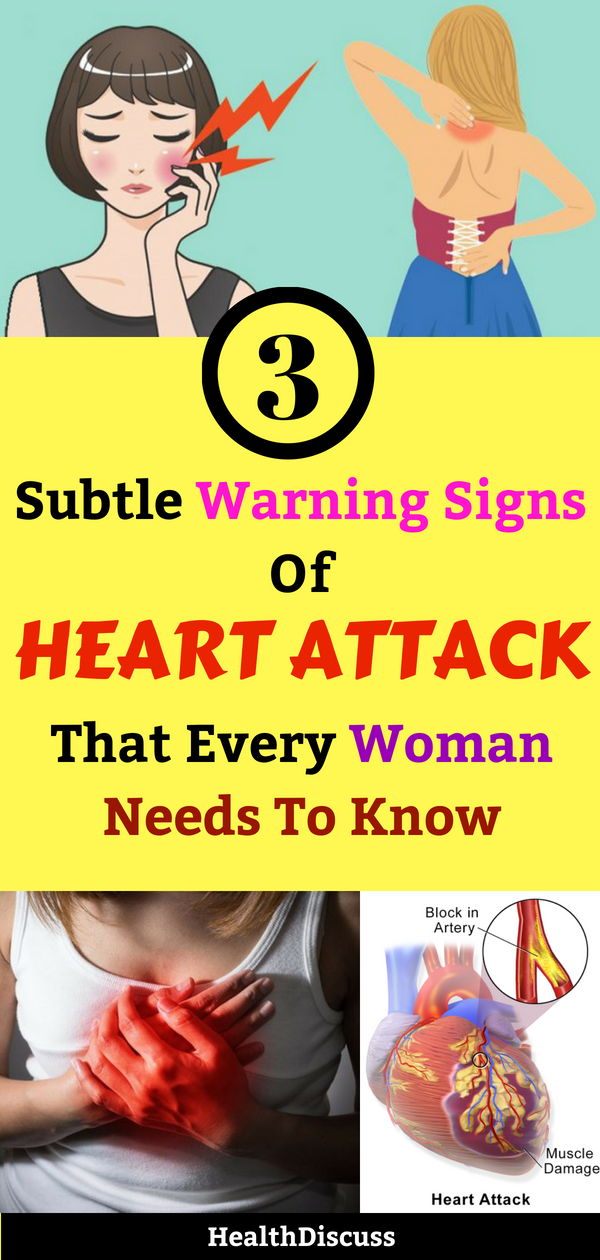
3 subtle warning signs of a heart attack that every woman needs to know

Hidden Signs of Heart Attack in Women

Women are at higher chance of dying from a heart attack, compared to all forms of cancer? What`s more, more women die from heart disease than men.

However, most people are not familiar with these facts, and heart disease is being perceived as “man`s” problem.  Hence, this lack of awareness puts women at higher risk for heart disease and premature death.

Heart Disease Facts and Figures


  • Every year around 735,000 Americans have a heart attack
  • Heart disease is the leading cause of death with 17.3 million deaths a year
  • 48.3 million women suffer from some form of heart disease
  • In America, heart disease is the #1 cause of death of women

What is a heart attack?

When a certain area of the heart lacks oxygen, a heart attack occurs.  Obstruction caused by plague in the coronary arteries is the most common cause of heart attack, as the coronary arteries are in charge of carrying both oxygen and nutrients to the heart.

Early Subtle Warning Signs of a Heart Attack That May Be Easy To Miss

1. Unusual Fatigue

Sudden or new fatigue is a matter of concern. Any feeling of heaviness in the chest followed by fatigue could be an early sign, too.

2. Sweating and Shortness of Breath

If sweating and shortness of breath persist while resting or after an exercise, you need to get checked up. In case they are accompanied with symptoms like chest pain, consult a doctor as soon as possible.

3. Pain in Areas Other Than the Chest

Pain indicates that there is something wrong, but it doesn’t necessarily point to the exact location of the root problem.  Back pain, pain in the arm, or jaw pain often indicate a heart attack.

Symptoms Common To Women at the Time of a Heart Attack


  • Nausea
  • Shortness of breath
  • Lightheadedness
  • Stomach pain or pressure
  • A feeling of squeezing or fullness in any area of the chest
  • Pain in the arms, jaw, back, or neck

  9 Tips to Reduce Your Risk of Heart Attack

1. Tame the inflammation with Curcumin

Excessive inflammation is linked to an increased risk of coronary artery disease as well as heart attack. Supplementing with curcumin, the active ingredient in turmeric, has been shown to the accumulation of buildup in the arteries due to its potent anti-inflammatory properties.

2. Easy on the sugar!

According to a 2014 study, those who eat 10-24 percent of their daily calories from added sugar are at 30 percent higher risk of death by cardiovascular disease. High calorie intake also lowers good cholesterol and increases the levels of triglycerides.

3. Combat Oxidative Stress with Vitamin C and Fish Oil

It has been scientifically shown that vitamin C deficiency increases the risk of dying from coronary artery disease.  To protect yourself and dilate the arteries, consider adding fish oil to your daily diet.

4. Add Vitamin D and Vitamin K to Your Health Regimen

For optimal protection, consider supplementing with vitamin D3 until your blood vessel is between 50-80 ng/mL. Additionally, make sure you get enough vitamin K as well, since lack of this nutrient increases the risk for calcification of the arteries.

5. Eat Garlic

Garlic helps lower the risk of heart attack by lowering blood pressure, the force of blood against the artery walls. In case you don’t like its smell, opt for supplements instead. For optimal results, take at least 480 mg a day.

6. Eat your fruits and veggies!

It has been shown that consuming more than five servings of fruits and veggies daily lowers the risk for coronary heart disease by 20 percent, compared to eating less.

7. Stop Smoking

Smoking increases the fibrinogen levels, a protein that increases the risk of dangerous blood clots and eventually a heart attack.  Once you quit smoking, the fibrinogen levels drop and go back to normal in a few years.

8. Meditate

According to a 2012 study, meditation reduced the risk of heart attack, stroke, and death in coronary heart disease patients.

9. Moderate Exercise

Women who exercise on a daily basis are at lower risk of heart attack than inactive women. However, intense workouts are at an increased risk too, so don’t overdo it.

Love it? Pin it to your HEALTH board to SAVE it!


source: http://besthealthyguide.com

3 nutrients that prevent fatal heart attacks that nobody talks about

A heart attack is an obstruction of an artery which is a crucial pathway for blood to be carried throughout the body.  It happens in a matter of seconds, and it changes everything in an instant.

There are over 735,000 heart attacks annually in the U.S alone, 15 percent of which ended fatally. With this being said, it`s a good idea to gain some understanding of its symptoms, since rapid medical attention is the key step for survival.

How Does a Heart Attack Happen?

While it happens in a matter of seconds, heart attacks don’t come out of the blue. As a matter of fact, it takes a lot of time of damage within the body to cause a heart attack.

The arteries are designed to run smoothly and allow a proper blood flow around the body. Every moment we have been alive, our blood is moving freely throughout the system. Once it stops, it causes as an extremely serious problem.

An obstruction begins with damage to the wall of an artery. There are many different causes of this damage, including inflammation, low antioxidants, free radicals, and many more. With the presence of dense LDL and/or lipoprotein-a or Lp(a), the damage can aggravate, as both of these are affected by nutritional and lifestyle changes.

3 Nutrients To Reduce The Chance Of A Heart Attack


1. PQQ

Pyrroloquinoline quinone (PQQ) is a compound which helps the body perform a wide range of actions. It acts as antioxidant that fights off free radicals that can damage to the arterial lining.  It also has a critical role in the production of mitochondria.  PQQ helps keep the heart function at an optimal level by providing a constant supply of energy.

What makes PQQ so beneficial in terms of heart attacks is its ability to prevent new ones from occurring. Most people who have one heart attack are at higher risk of having a second, mostly due to the damaged caused by the first one.

It has been also shown to minimize the damage caused by heart attack. Hence, if you are at risk of having a heart attack supplementing with this nutrient can help one from occurring.  In case you already had one, it will prevent a new one from happening.

You can find this nutrient in most whole foods while using it in supplement form is also a good idea.  It has been found to be safe at a dose of 60mg for 4 weeks or a dose of 20mg daily over an extended period of time.

2. CoQ10

Coenzyme Q10 is an essential nutrient in the body, needed for proper heart function. It is actually an antioxidant which works to prevent cellular damage. While everyone is capable of producing CoQ10, those in their 30s need to consider supplementation, too.

It has played a notable role in the production of energy and statins, which can disrupt body`s ability to produce CoQ10.  Since the heart needs great amounts of energy to function properly, lack of energy may lead to heart failure. Those taking statins should supplement with CoQ10 as well.

The most important thing regarding this nutrient is its role in preventing heart attacks. It is found within Lp(a) that can contribute to heart attacks. It works by inhibiting Lp(a) receptor, which in turn causes a reduction in its levels throughout the body.

Thanks to its antioxidant content, CoQ10 protects against damage to the arterial walls and the accumulation of plague. Those with cardiac problems have extremely low levels of this nutrient, meaning that in order to cut down the risk of heart attack, supplementation is of utmost importance. Currently, there are two types of CoQ10 on the market: ubiquinol and ubiquinone.

3. Glutathione

Glutathione is an extremely potent antioxidant that is naturally produced by the body.  As for its relationship with heart attacks, it is important to talk about homocysteine first.

Namely, homocysteine is produced in the body from an amino acid methionine. Later on, the body produces glutathione from homocysteine.

The problem occurs when the conversion of homocysteine to glutathione isn’t possible, so it stays in the body as homocysteine and wreaks havoc on the system.  The conversion of homocysteine requires vitamin B6, and it cannot be done without it.  It is worth mentioning that heart attacks patients have been found to have higher levels of homocysteine.

Hence, a proper vitamin B6 intake is extremely important to prevent heart attacks. Good sources of this vitamin include sea veggies like dulse, seaweed, and nori; whole grains, and green leafy vegetables.

Being a powerful antioxidant, glutathione should be supplemented in order to protect against damage from free radicals to the arteries.  To increase glutathione levels in the body, it is recommended to supplement with N-acetyl cysteine (NAC), as taking glutathione on its own can cause it to be divided into its amino acid compounds.

source: http://besthealthyguide.com
How to Stop a Heart Attack In 1 Minute?

Did you know that you can actually stop a heart attack in one minute? John Christopher, a popular herbalist, has discovered a method which can stop a heart attack in 60 seconds. The ingredient he discovered to be able to stop a heart attack is cayenne pepper. This natural ingredient is so amazing that it can save lives.

How to Use Cayenne Pepper


According to the Scoville Heat Units, cayenne pepper has at least 90,000 Scoville units. Hence, if you or someone around you is having a heart attack, make sure you give them a teaspoon of cayenne pepper in a glass of water. Note that the patient has to be conscious. In case the person is unconscious, you can use cayenne pepper extract. All you should do is put a few drops under the tongue for results.

This powerful ingredient will increase the heart rate and balance the circulation. Moreover, cayenne pepper will carry blood to all parts of the body. It will stop bleeding instantly and help in heart attack recovery.

Dr Schulz’s Cayenne Tincture Recipe

Ingredients:


  • Cayenne pepper powder
  • 1-3 fresh cayenne peppers
  • 50% alcohol (you can use vodka)
  • 1-litre glass bottle
  • Gloves

Instructions:

First, you should wear gloves for safety. Then, fill a quarter of the glass bottle with cayenne pepper powder. Next, pour in just enough alcohol that it covers the powder. Then, take a blender and mix the cayenne pepper and alcohol mixture. Add the mixture to the bottle so that  ¾ of the bottle is filled. Then, you should fill the bottle to the top with alcohol and put the lid on. Shake the bottle several times a day. Store the tincture in a dark place for 14 days. Then, strain it and keep it in a dark bottle. It never spoils.

If the patient is conscious and suffered a heart attack, you should give them 5-10 drops of the tincture. Then, give another 5-10 drops after 5 minutes. Repeat the treatment until the patient’s condition improves.

On the other hand, if the person is unconscious, you should put 1-3 drops under their tongue, and begin CPR. Then, repeat the treatment after 5 minutes, and repeat it every 5 minutes until their condition improves.

source: http://unknownremedy.com

Signs Of Heart Attack That You Have To Know!

Many people believe that the main symptom of heart attack is when the individual clutches at her/his heart dramatically with severe chest pain.

In fact, this is not true. 25% of the heart attacks occur silently, without any clear symptom or sign.

Dr. C. Crandall is a cardiologist who dedicated many years of his career in order to minimize, prevent and reverse heart disease. According to him, our heart actually gives us a sign of a potential heart attack before it happens.

1. Swelling

A lot of people believe that swelling of the ankles or feet is related to excessive standing or sitting without knowing that heart failure can lead to accumulated fluid in the body.

It can cause swelling the ankles, feet, legs, or abdomen. Many people can retain so much fluid and experience sudden weigh gain. When this occurs, the individual can lose the appetite.

2. Anxiety

People that have heart attack state that they had experienced anxiety attacks immediately before the heart attack happened.

Even though some people with anxiety attack consider that they are having heart attack, it is better to prevent than cure.

3. Pain in the other body parts

The pain starts in the chest and spreads to the jaw, shoulder, arms, back, and abdomen.

In some cases, people do not experience chest pain, but pain in some other parts of the body. Mostly, the pain occurs in one of both arms or between the shoulder blades.

4. Coughing

There are some cases when the victims cough bloody phlegm or have wheezing or nagging cough. This can indicate a heart failure and it is because of fluid accumulation in the lungs. Make sure to pay particular attention to this symptom!

These are some of the most common signs:


  • Nausea
  • Lightheadedness
  • Chest discomfort
  • Cold sweat
  • Shortness of breath

It is very important not to ignore the symptoms hoping that they will go away. In a case they last for more than 5 minutes, make sure to call 911 or go to the hospital immediately. Taking an aspirin is also a helpful alternative, except for those who are allergic to it.

Love it? Pin it to your HEALTH board to SAVE it!


source: http://besthealthpage.com/signs-heart-attack-know/

No More Strokes, Heart Attack Risks, Clogged Arteries with This Healthy Drink

Clogged arteries are a common condition when deposits of fatty plaque within an artery trigger heart or brain restricts the blood flow. Thus, the blood carrying oxygen and nutrients cannot reach different body organs and tissues. As a result, huge damage occurs and the function of various organs is hindered. There are numerous reasons for clogged arteries, such as excessive smoking, a high-fat diet, lack of physical exercise, being overweight, diabetes, hypertension and high cholesterol.

If left untreated, clogged arteries can cause some serious health issues, including coronary artery disease, carotid artery disease, peripheral artery disease and even a heart attack or stroke. Unfortunately, people who deal with clogged arteries do not experience evident symptoms and the symptoms appear only when the issue becomes severe.

Luckily, there are natural remedies which can help you prevent the condition from worsening and reduce the risk of a serious cardiovascular disease. One of the most powerful remedies includes garlic and lemon. The remedy which we will present you today can unclog the arteries and prevent strokes, heart attacks, and artery issues.

Natural Remedy for Unclogging Arteries


Ingredients:


  • 1-liter water
  • 6 lemons (peeled and cut into chunks)
  • 30 garlic cloves (chopped)

Instructions:

You should make a puree of the lemons and garlic in a blender. Then, put this mixture in a pan or pot to simmer/boil. When it boils, let it cool aside. Transfer this mixture to a jar and store it in the fridge. The first dose is 50 ml for 3 days. Then, make a break for a week. The second dose is 50 ml daily for 3 days again. Repeat this method every 6 months.

source: http://unknownremedy.com/2017/04/13/heart-attack-healthy-drink/

Prevent Stroke, Hypertension and Heart Attack By Consuming The World’s #1 Food

If you are searching for the healthiest food in the world, we have something to show you.

You should definitely try dates. They are full of beneficial effects that are able to soothe issues such as hypertension, cholesterol, heart attack and strokes.

They’re going to build up your metabolism in the body in no time because they are packed with large amounts of nutrients. These are the most important reasons why you should implement dates into your diet.

These Fruits Are Full Of Iron

The presence of iron in these tasty fruits makes them ideal for pregnant women, children and people who suffer from anemia. 0.9 mg of iron is consisted in 100 grams of dates 11% of the recommended daily intake. Iron supports the flow of oxygen through the blood and also has beneficial effects on the hemoglobin and red blood cells.

Dates soothe constipation

These fruits are rich in relieving properties that soothe constipation and diarrhea. In order to boosts you digestion, put some dates in water to stay during the night and then drink it the next morning. The effects are mild and laxative.

Prevent diarrhea

The presence of potassium in their content relieves the belly flora and the intestines, prevents diarrhea and stimulates more effective bacteria in this way.

Control bodyweight

You should definitely consume dates if you want to prevent excessive fat. Since they have no cholesterol, dates are going to control your body weight.

Regulate cholesterol

LDL or bad cholesterol can be regulated by these fruits. They prevent blood clots and cleanse blood vessels.

Strengthen the heart

Soak some dates at night, strain them in the morning and put out the seeds. You can also blend the seeds.

Prevent Stroke

As we already mentioned above, the presence of potassium in dates prevents any stroke and significantly improves the nervous system.

Regulate Blood Pressure

A lot of dates should be consumed by people who suffer from hypertension. They have no sodium and are rich in potassium. 80 mg of magnesium are consisted in 5-6 dates. This mineral improves the blood flow and lowers blood sugar.

You have no reasons to worry if you consume several dates a day.

source: http://www.healthytipsworld.net

10 Foods That Unclog Arteries Naturally and Protect from Heart Attack

Probably one of the most dangerous and life-threatening diseases of our time is the heart disease. The biggest risk factor for heart attack are clogged arteries, which interrupt the blood flow throughout the entire body. Therefore, it is very important to prevent these conditions and undertake several steps so we can unclog the arteries. For this reason, we present you 10 foods and drinks, which will unclog the arteries and help you prevent a heart attack.

10 Foods Which Can Protect from Heart Attack


1. Avocados

Regular consumption of avocado will improve the blood cholesterol, which will keep your arteries clean. Hence, instead of mayo in your sandwich, add some avocado.

2. Asparagus

Asparagus is beneficial for lowering blood pressure, preventing clogged arteries and cardiovascular diseases. It is packed with minerals, fiber, and vitamins, such as vitamin B1, B2, C, E, and K.

3. Pomegranate

This amazing fruit is rich in antioxidants, which protect the lining of the arteries. Moreover, pomegranates promote the blood flow by stimulating the body’s production of nitric oxide. Hence, your arteries will be cleaned and your body will be protected from cardiovascular diseases.

4. Broccoli

Broccoli contains vitamin K, which keeps the calcium from damaging the arteries. Moreover, broccoli abounds in fiber, which is beneficial for the blood pressure, as it reduces the high blood pressure and cholesterol levels.

5. Turmeric

This spice is packed with anti-inflammatory properties. These properties prevent the damage to arterial walls, lower the risk of blood clot, and lower inflammation. All these benefits from turmeric result in a healthy heart.

6. Nuts

Nuts are rich in fatty acids, unsaturated fats, and healthy omega-3 fatty acids. These nutrients provide many health benefits. Therefore, including nuts in your daily diet will reduce the cholesterol levels, boost your memory, and keep your heart healthy.

7. Whole Grains

Eating oats, whole grain bread, and brown rice on a daily basis will keep your blood vessels clean. Moreover, the whole grains will protect your heart due to the fiber content, and regulate the cholesterol levels.

8. Salmon

This fish is packed with healthy fatty acids. These nutrients will lower your blood cholesterol and prevent inflammation, which can trigger heart disease.

9. Cranberries

Cranberries contain antioxidants, which can reduce the bad cholesterol and increase the healthy cholesterol levels. Consuming them as a juice will lower the risk of heart disease.

10. Green Tea

Green tea abounds in high levels of catechins. Therefore, drinking a cup or two a day of green tea will lower the arterial blockage, boost your metabolism and support the cardiovascular health.

source: http://unknownremedy.com

10 Foods That Will Clean Your Arteries And Protect You From Heart Attack!

Cardiologists warn that heart diseases are one of the most severe illnesses and all people should be very careful if they are facing with such medical condition.

Heart or cardiovascular disease generally refers to conditions where the arteries are clogged and narrowed, which may lead to interrupting of the blood flow. Blocked blood vessels actually are blocking the flow of the blood through the body, towards the heart, as well as to other parts of human body.

There are various factors that contribute to clogging of the blood vessels, including unhealthy diet, lack of physical activity and stress.

In order to avoid heart attack, chest pain (angina) or stroke you need to avoid unhealthy diet and make some changes that are crucial.

Below we are going to suggest you 10 foods that will keep your heart healthy:


Salmon fish

This type of fish is one of the best ways to keep your heart healthy and the reason for that is the presence of fatty acids. Experts explain that cholesterol and inflammation are the main causes for heart diseases, and salmon can help you to prevent it!

Orange juice

Oranges are high in antioxidants and Vitamin C. These components will help you to keep your blood vessels healthy and in same time will keep the blood pressure in optimal levels. Studies have proved that only 2 glasses of this juice can provide the necessary vitamins and minerals for your body.

Nuts

This fruit is abundant in unsaturated fatty acids and Omega-3 fats. That is the reason why nuts are great for keeping optimal cholesterol levels in the body. Moreover, nuts are extremely powerful and can boost memory and repair joint problems.

Turmeric

Curcumin is the active compound in turmeric and it is incredibly beneficial for human body. With regular intake of turmeric powder you can reduce overactive fat storage and tissue inflammation. You can consume the turmeric powder as liquid or you can add it to your meals.

Green tea

Catechin is incredibly powerful antioxidant present in green tea. Additionally, this tea contains many energizing and potent calming properties which are able to reduce the absorption of cholesterol in the body. You can increase the metabolic rate of your body with consummation of green tea. Recommended daily dosage is 2 cups.

Watermelon

With consumption of this fruit you will increase the production of nitric oxide. This fruit is great for healthy blood vessels. It is advisable to consume this fruit on regular basis as it is very beneficial for your body.

Whole grain

Some of the grains that come under the category of whole grain are oats, whole grain bread and brown rice. These grains are abundant with fiber that actually is essential for reducing the cholesterol. Moreover, it will prevent accumulation of cholesterol in inner walls of arteries. Also, whole grains can break down the cholesterol which is already present in the body.

Cranberries

Due to the fact that cranberries are high in potassium, they can control/ reduce the bad cholesterol build up in the body. Experts say that they are essential for the overall development of the body. Only two glasses cranberry juice on daily basis will lower the risk of heart attack by 40%.

Pomegranate

This fruit is rich in phytonutrients that leads to promotion of nitric oxide production in the body. Therefore, by producing nitric oxide, this fruit substantially will improve blood circulation in your body. Our advice is to add pomegranate in salads.

Avocado

Many experts say that avocado is one of the best fruits for your heart. Due to the fact that it is abundant with fats, it can keep healthy balance between good and bad cholesterol. You can consume avocado along with eggs or to add it in salads.


source: http://dailyhealthmedia.com

Study: This Spice Can Slash Your Heart Attack Risk By 56%

If you can’t find turmeric hiding in your spice cupboard, it’s time to go and buy some! This healthy orange spice has powerful anti-aging properties, it is rich in antioxidants, and its anti-inflammatory benefits are simply unmatched.

To add to its list of benefits, a new study has found that this spice can even reduce your risk of heart attack.

A study was published in the American Journal of Cardiology, stating that turmeric extract can decrease risks of heart attack by 56%.

This discovery backs up earlier research printed in the Nutrition Research journal in 2012 that said eating this spice or consuming supplements of it can improve one’s cardiovascular health as much as aerobic exercise.

How does this work?
It all comes down to the main polyphenol compound in this golden spice, called curcumin. Curcumin is responsible for turmeric’s bright color and for the active properties that can empower vascular function.

This amazing ability of curcumin has been especially helpful for postmenopausal women who reach the age where heart problems can arise and become a health concern.

Consuming turmeric for the heart
According to the conclusion of the study, one should take 150 mg of turmeric extract (equal to 25 mg of curcumin) every day for eight weeks to improve heart function.

The curcumin content in turmeric powder is usually 2%. So, be aware of this if you choose this approach over the supplements. To reap these heart benefits, consume a teaspoon of turmeric daily. Alternatively, buy turmeric extract capsules.

Also, exercise!

Although curcumin helps the bolstering of cardiovascular function, don’t forget about physical activity entirely! The researchers of this study all agreed that nothing could actually replace exercise, no matter how much turmeric you eat.

So get back on the treadmill and keep going! Imagine the impact of being physical active alongside the benefits of turmeric. The USA Department of Health and Human Services recommends 2.5 hours a week of moderate-intensity, or one hour and 15 minutes of vigorous intensity aerobic exercises, or a combination of both. They also suggest muscle-strengthening activities two or more days weekly.
Moderate activity includes dancing, canoeing, biking on level ground, gardening, brisk walking, and water aerobics.

Vigorous activity includes: aerobic dance, jumping rope, jogging, running, swimming laps, brisk walking, play tennis with singles, and biking faster than 10 miles an hour.

Get moving, and don’t forget to take your turmeric juice with you!

suorce: http://worldhealthchoice.com

Eat just one on day, so forget it to cancer and heart attack

In addition to being delicious and full of juice, oranges and has numerous health benefits. We reveal 10 reasons you should vain eat one orange a day.

Strengthens the Immune System

The high proportion of vitamin C in oranges stimulate white blood cell production in the body, thereby strengthening the immune system.

Prevents Cancer

Vitamin C in oranges and acts as an antioxidant. Oranges, like other citrus species containing D-limonene that has been shown to effectively prevent the development of certain cancers such as skin cancer, breast, lung, colon and mouth.

Lowers Cholesterol

One of the most flavonoids that oranges contain abundant is hesperidin. Studies show that this flavonoid lowers bad cholesterol in the body. You can protect against heart attacks and other cardiovascular problems.

It relieves Inflammation

Oranges also have anti-inflammatory properties that help to relieve pain in cases of arthritis and stiffness of muscles and joints.

Gives Skin a Glow

Antioxidants in orange protect the skin from the harmful effects of free radicals that are known to accelerate the aging process of the skin.

Regulates Digestion

Oranges are full of dietary fiber, which stimulate digestive juices and eliminate constipation.

Proper Brain Development

An excellent source of folate and folic acid which help proper development of the brain is therefore particularly recommended for pregnant women consuming one orange a day.

Excellent Eye

Just like your skin, our eyes also threaten damage as we age. Oranges are rich in nutrients like vitamin A, vitamin C and potassium, which are great for the eyes. So, if you want your vision is good, eat an orange every day.


source: http://instiks.com